Mental Health
Sleep and Your Mind: Why Rest Is the Foundation of Mental Health
Published

After a bad night's sleep, everything feels harder. Small problems seem bigger, patience runs thin, and worries grow louder. This isn't just in your head, or rather, it is, in a very real, biological way. Sleep is one of the most powerful and most overlooked foundations of mental health.
A Two-Way Relationship
Sleep and mental health are closely intertwined. Anxiety, depression, stress, and trauma can all make it harder to fall or stay asleep. At the same time, poor sleep can worsen mood, increase anxiety, and make it harder to cope with daily challenges. Researchers now see insomnia not only as a symptom of mental health problems, but also as a risk factor that can contribute to their development.
The encouraging side of this relationship is that improving sleep can also improve mental wellbeing.
What Happens in Your Brain Without Sleep
In a well-known study published in Current Biology in 2007, researchers Seung-Schik Yoo, Matthew Walker, and colleagues showed participants emotionally negative images after a night without sleep. Compared with well-rested participants, the amygdala, the brain's emotional alarm centre, was around 60% more reactive. At the same time, its connection with the prefrontal cortex, the area that helps us think clearly and regulate emotions, was weaker.
In simple terms: without enough sleep, the brain's emotional accelerator is pressed harder while its brakes work less well. That is why we feel more irritable, anxious, and overwhelmed when we're tired.
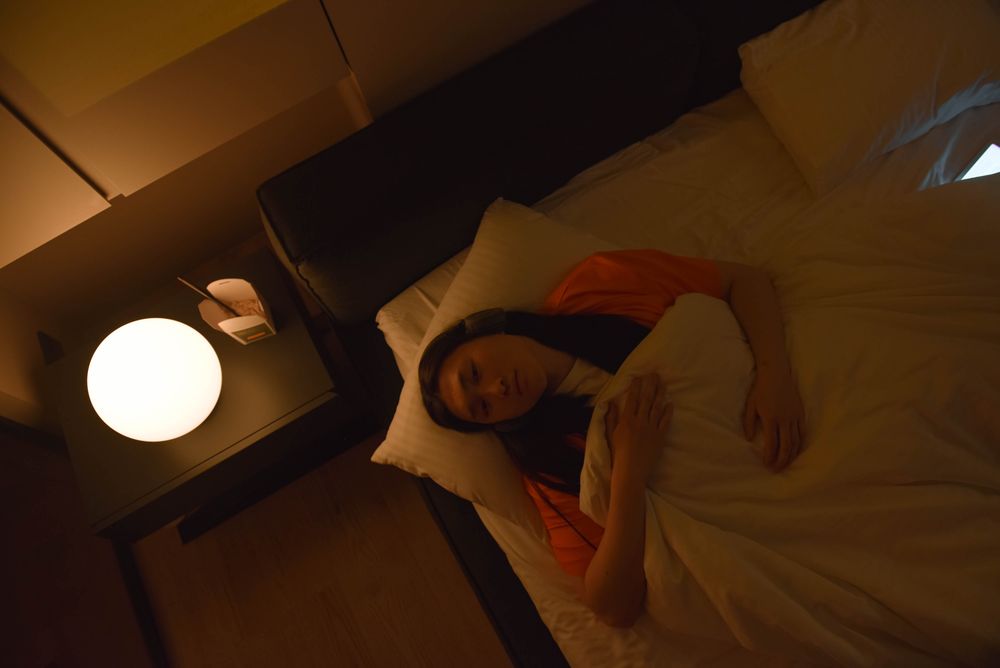
Lying awake at night can make worries feel larger than they are. Photo: cottonbro studio / Pexels
How Much Sleep Do We Need?
Sleep experts, including the American Academy of Sleep Medicine, recommend that most adults get at least seven hours of sleep per night on a regular basis. But quality matters as much as quantity. Waking up often, sleeping at irregular times, or never feeling refreshed can all affect how you feel during the day.
Signs Your Sleep May Be Affecting Your Mood
- You feel more irritable or emotional than usual
- You struggle to concentrate or make decisions
- Worries feel bigger and harder to let go of
- You rely heavily on caffeine to get through the day
- You feel low in energy and motivation
- Your mind races when your head hits the pillow
Practical Steps for Better Sleep
1. Keep a consistent schedule
Going to bed and waking up at the same time every day, even on weekends, helps regulate your body's internal clock. Consistency is one of the most effective sleep habits.
2. Create a wind-down routine
Give yourself 30 to 60 minutes before bed to slow down. Dim the lights, read something calming, take a warm shower, or practise gentle stretching. This signals to your body that it's time to rest.
3. Be mindful of screens
Phones and laptops keep the mind alert with messages, news, and endless scrolling, and their light can interfere with your body's sleep signals. Try putting devices away at least 30 minutes before bed, or keep your phone outside the bedroom.

Late-night scrolling keeps the mind switched on. Photo: cottonbro studio / Pexels
4. Watch caffeine and heavy meals
Caffeine can stay in your system for many hours, so try to avoid it in the afternoon and evening. Large meals close to bedtime can also make sleep less restful.
5. Get morning light and daytime movement
Exposure to natural light in the morning and regular physical activity during the day both help strengthen your sleep-wake rhythm.
6. Don't fight wakefulness
If you can't sleep after about 20 minutes, get up and do something quiet and relaxing in dim light until you feel sleepy. Lying in bed frustrated can teach the brain to associate the bed with wakefulness and worry.
7. Give worries a time and place
If your mind races at night, try writing down your worries or a to-do list earlier in the evening. This helps your brain feel that things are "parked" until tomorrow.
When to Seek Help
If you've had trouble sleeping for several weeks, or poor sleep is affecting your mood, relationships, or daily functioning, talk to a healthcare professional. Cognitive behavioural therapy for insomnia (CBT-I) is recommended by major medical organisations, including the American College of Physicians, as the first-line treatment for chronic insomnia. It helps change the thoughts and habits that keep sleep problems going, and its benefits tend to last.
It's also important to see a doctor if you snore loudly, stop breathing during sleep, or feel extremely sleepy during the day, as these may be signs of a sleep disorder that needs medical attention.

Rest is not a luxury; it is care for your mind. Photo: cottonbro studio / Pexels
A Final Thought
In a busy world, sleep is often the first thing we sacrifice. But rest isn't a luxury or a sign of laziness; it's one of the most important things you can do for your mind. Protecting your sleep is an act of self-care that makes everything else, from managing stress to handling emotions, a little easier.
References: Yoo, S. S., Gujar, N., Hu, P., Jolesz, F. A. & Walker, M. P. (2007), "The human emotional brain without sleep: a prefrontal amygdala disconnect," Current Biology; American Academy of Sleep Medicine and Sleep Research Society (2015), adult sleep duration recommendation; American College of Physicians (2016), guideline on the management of chronic insomnia. This article is for educational purposes and is not a substitute for professional care.
Would you like to talk this through?
Reading helps, but change usually starts in conversation. Book a confidential session, online and in Arabic or English.